What is glaucoma?
Glaucoma is a group of eye diseases that can cause progressive vision loss and blindness by damaging a nerve in the back of the eye called the optic nerve. The symptoms can start so slowly that patients may not notice them. The only way to find out if a patient has glaucoma is to get a comprehensive eye exam.
There is no cure for glaucoma, but early treatment can often stop the damage and protect vision.
How is glaucoma assessed?
During a comprehensive exam, Dr. Saari will perform a battery of tests and may suggest additional testing to assess your risk. The first test starts with our pretesting imaging for all new adult patients which includes Ocular Coherence Tomography and Pachymetry. During the exam we will ask pertinent family history questions regarding a patient’s risk, perform a dilated assessment of the optic nerve and measure intraocular pressure (IOP).
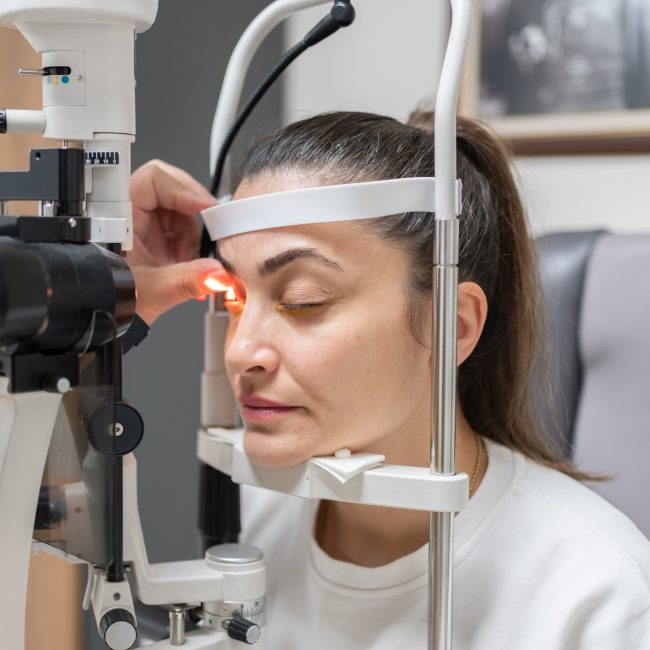
For patients at an elevated risk Dr. Saari will have patients return for additional testing including tonometry, visual field testing and more advanced optic nerve imaging. Due to the fact glaucoma is a slowly progressive condition a patient may need multiple visits over a year or two to fully understand their risk for glaucoma or in very obvious cases the diagnosis can be done at a single visit but that varies greatly based on many factors.
OHIP does not cover all glaucoma testing for patients who are not diagnosed or under current medical or surgical management for glaucoma as outlined in the Schedule of Benefits for Optometry Services.
How is glaucoma managed?
While the full nature of glaucoma is not completely understood, glaucoma is managed by lowering the IOP through prescription eye drops, laser treatments and surgery. Since 2011 Optometrists have been able to prescribe medications including glaucoma drops, many patients may only require 1 or 2 drops daily to reduce the pressure and significantly slow progression.
Dr. Saari will tell you during your exam that “my goal is to ensure that you have good vision at 120 years old” which is very achievable given the large selection of different glaucoma medications that are available. In cases that are more advanced, not as responsive to medical therapy or where medical therapy isn’t the optimal solution for a patient then Optometrists will currently refer patients to an Ophthalmologist for additional treatments including SLT or Iridotomy (Ontario Optometrists Poised to Ease ER Pressure with Expanded Scope – Ontario Association of Optometrists.
Ophthalmologists are also able to perform more advanced surgical procedures in very complex cases. Regardless of the treatment provided, routine exams by an Optometrist are required to ensure optimal management strategy and maintain a lifetime of good vision.